
February 2009
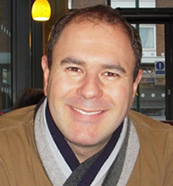 Nick Einhorn is widely acknowledged to be one of the best magicians in the world. I had known his name for a long time before I actually saw him, partly through hearing other magicians talk about him and also because I learnt some excellent tricks from his book How to Do Magic Tricks (see the Magic Books section). He has written several books, teaching magic to beginners, selling over 500,000 copies worldwide.
As well as writing books, Nick has won some extremely prestigious prizes and is a Gold Star Member of The Inner Magic Circle, which is as high as it’s possible to climb in that august institution.
At the IBM British Ring convention in Eastbourne last year, I experienced Nick’s fantastic lecture and had a chat with him in the dealers’ hall. I was struck by how very down-to-earth and approachable he is. Despite being in constant demand worldwide, Nick is a straightforward, gentle bloke and I felt very comfortable in his company (which is certainly not the case with every magician of Nick’s standing).
I drove through heavy snow to interview Nick for WeLoveMagic at Starbucks in his hometown of Elstree, near London. It took five and a half hours to make a three-hour journey but it was well worth it!
Georgie: Let’s start at the beginning. Can you tell us a bit about how you got started, what drew you into magic, how old you were and so on?
Nick: I was four years old. Classic story: magician at my fourth birthday – who I’m still very good friends with – and he performed some tricks that I remember even today. He poured a pitcher of milk into a top hat, then put the hat on my head and the milk disappeared. And I knew that was what I wanted to do. So that’s where my initial inspiration came from and then my dad brought home a magic trick from Hamley’s, a thumb-tip silk vanish. He saw someone demonstrating it and he thought it was very clever, so he bought it and came home and performed it for me.
Georgie: That’s impressive, he was able to perform it by the time he got home.
Nick: Well enough to impress a four-year-old. I begged him to tell me how it was done and eventually he did. He had no interest in it himself; he’d bought it because I was so interested in magic. And it just spiralled from there, really. My dad used to take me to Davenport’s and International Magic and I used to save up and buy magic tricks.
I remember when I was seven or eight, it was about three weeks before Christmas and I was looking through the cupboards trying to find my presents, as I’m sure a lot of kids do, and I found a trick from Davenport’s that Dad had bought for me, called Rainbow Cascade. When my parents were out, I opened the packet and practised the trick. In those three weeks, I learnt how to do the Elmsley Count from reading the instructions and I perfected this trick. Then on Christmas Day, when I unwrapped the present, I feigned surprise and said, “Oh, this is great! Let’s see if I can learn it,”. Within ten minutes, I was doing this trick faultlessly and my dad thought I was a child genius. I don’t think he knows to this day that I’d found it three weeks beforehand.
Georgie: It seems a pity to be telling him now.
Nick: I think he’ll forgive me.
Then, when I was nine or ten years old, my mum found a guy in the yellow pages who said he taught magic. She used to take me to his house and leave me there for a couple of hours at a time and he taught me a lot of stuff. I was like a sponge, soaking it all up. And this guy never used to charge a single penny, it was very strange. Then one day I knocked on the door and his wife answered it and said, “He’s gone, he’s left, he won’t be back,”. That was the last I saw or heard of him until about six months ago, when he got in touch, quite out of the blue, 20 years on.
Georgie: Did he explain?
Nick: I still don’t know what happened back then but I know that now he’s not a very well man and perhaps that’s why he got in touch.
Georgie: How mysterious. That’s almost like a fairy tale. But he gave you some very good training and was it then that you decided you wanted to be a professional magician?
Nick: I knew from four years old.
Georgie: Oh, I see, so you weren’t just keen to do magic as a hobby, it was always going to be your career.
Nick: Yes, although I did have other jobs. I loved technical drawing and I thought I might go into architecture or something like that. I also enjoyed acting, I wanted to be an actor. I’d always had the main parts in the school shows. I loved being on stage and having a big part to play. Later on, I started a university course in dance, music and drama and left after about a month because I knew it wasn’t for me. I was in advertising for a while as well, so I did have a proper job, so to speak – for six months. Actually, Virgin Atlantic used one of my ads for the front page of the Sunday Times. But the company I was working for wasn’t really interested in my ideas and I just thought, “I’m leaving,”.
Georgie: Yes, quite right. But advertising is a useful skill if you’re going to be self-employed. At what point did you start doing professional gigs?
Nick: I was probably 11. Somewhere I’ve got a picture of me performing at my first gig, Mum and Dad’s friends’ daughter’s party. And the gigs just came in after that. At 14, I was on the phone explaining the fee structure for my 45-minute kids’ show. I learnt to talk to adults at a very early age, which gave me a lot of confidence.
Georgie: Where do you come from?
Nick: I’m an Essex boy. I was born in a little place called Barkingside and lived there till I was 21. Then I moved over to Hertfordshire with my now wife. We’ve got a little daughter, Emily, who’s three years old, and another one on the way, due in July.
Georgie: Congratulations! Does Emily want to be a magician too?
Nick: She wants to help Daddy, yes. She’s tax-deductable so, as soon as I can get her into the act, I will.
Georgie: Excellent. I’m sure you could levitate her or something.
I don’t know Barkingside but has it got a magic society? Did you join a group of magicians?
Nick: Yeah, I did. Unusually, there was a female magician who had a male assistant. Her name was Stacey Lee and she was one of the first female members of The Magic Circle. She opened a magic shop called Stacey’s Magic Palace, which was about ten minutes from where I lived, and I thought heaven had just landed on my doorstep. They ran a club for youngsters and I joined that when I was probably about 14. There were a lot of enthusiastic kids there, some of whom have gone on to become professional magicians, some of whom are no longer interested in magic and some just do it as a hobby still.
When I was 16, I joined the Ilford Magical Society, which was all adults and I was the youngest one there. I met a lot of really friendly people, a lot of people with a lot of experience, and they were really helpful to me.
Georgie: So you had tons of support all round.
Nick: Loads. Plus, by the time I was 16, I was demonstrating magic in Hamley’s and Harrod’s for Marvin’s Magic. That was my first job, really. It was commission-based, so I worked very hard. I made some good money, actually, and I was lucky to be there at a time when the other people working around me were people like Andy Nyman, Marc Paul and Anthony Owen.
Georgie: Interesting people.
Nick: Really interesting and I’m still very friendly with them now. It was a great job, I loved it.
Georgie: I can imagine. Also, although it’s much longer hours, it must be a bit easier to demonstrate magic to people who come up to you, wanting to know what it’s about, than to do magic at someone’s party, when the guests may not actually even like magic.
Nick: I know what you mean but, in fact, people coming into a toy shop or the toy department at Harrods may not be interested in magic. It’s your job to get them excited about a product (a magic trick), to build a crowd and ultimately to sell them something.
Georgie: Like at a trade show.
Nick: Very much like at a trade show. When you’re out performing at a party or a corporate event, you’re still selling but this time you’re selling yourself. You still have to approach people and you have to do it in a fun way and you have to get their interest quickly, in just the same way as when you’re demonstrating.
Georgie: So how do you approach people?
Nick: Well, you always have to bear in mind when you’re approaching a group of people that you’re interrupting them. If someone’s telling a joke, for example, don’t cut in just before the punchline. Give people time to enjoy the joke, then move in when they’re in that relaxed state afterwards.
Then you have to do something, or say something, in the space of 15-20 seconds that will mean they want to see more of you. And it goes without saying that you should be dressed appropriately, you should speak to them appropriately – all those things are very important.
Georgie: What’s the first trick you do?
Nick: It varies; I haven’t got a ‘first trick’. Sometimes I get someone to look at a card in a spread deck and I tell them which card they’re thinking of. Sometimes I do a coins-across routine, where the coin ends up under the spectator’s watch. It’s best not to start with a trick that involves borrowing something.
Georgie: That’s good advice. It makes sense that you need to establish yourself first, so they can trust you to give it back.
And how do you deal with people interrupting you when you’re performing – waiters, for example?
Nick: If I’ve been building up to this moment for a couple of minutes and I see this guy about to offer to top up someone’s wine, I’m likely to put my hand out and say, “Give me thirty seconds,” – literally as bluntly as that. It’s my performing environment and, as long as I’m not rude, I can be more forceful that I would ordinarily be, when I’m trying to get the conditions right for people to experience magic.
Georgie: Have you had any bad experiences with approaching people?
Nick: Not that have put me off. Once, in one of my residencies, a guy told me to go away, in the rudest possible terms. To be spoken to like that is not nice but it occurred to me that this guy may have just lost someone dear to him, or lost an important contract… there may have been any number of reasons.
Georgie: Absolutely. It was extremely unlikely to be your fault, since you hadn’t done anything, but it does feel personal at the time.
Nick: It ruined the rest of my day, for sure.
Georgie: Some magicians say they prefer performing for other magicians, rather than the public, because the public can be so unpredictable. Do you feel like that?
Nick: I can’t think of anything worse than performing for magicians.
Georgie: You must do a lot of it, though, to win all the competitions you win.
Nick: I have done in the past but I don’t enjoy it and I find it almost irrelevant, what my fellow magicians think of what I do. My main concern is what my paying audiences think of me. I always say, you don’t need to be the best magician in the world: you just need to be the best magician that your audience has ever seen. They’ve never heard of David Williamson or Bill Malone. They only know about you and if they like you they’ll give you the job.
Georgie: Going in for these competitions must take a lot of time and effort and preparation.
Nick: Yeah, it’s nerve-wracking and a lot of the time I’m less prepared than I should be. I remember being really unprepared for a very, very important competition but it was probably the fact that I’d left it to the last minute that pushed me to do something out of my comfort zone and actually do well because of it.
Georgie: But, if you don’t care what other magicians think, why do you go in for the competitions?
Nick: Good question. I suppose partly as a personal challenge and partly because, when I’m watching a magic competition, I often think, “I could have fared all right here,” and, if you have the audacity to believe you could do as well or better than the people you’re watching, put your money where your mouth is.
Also, raising my profile within the magic fraternity is good for when I come up with a magic trick that I want to sell. If people know my name because I’ve won competitions, it helps to build the Einhorn brand, if you like.
Georgie: Do you perform at your gigs the tricks you sell?
Nick: Almost all the stuff I’ve ever put out I’ve used in the real world. I go through phases with particular tricks, as I’m sure everyone does, but there are one or two that I would never go to a gig without – for example, Spooked.
Georgie: Yes, you showed me that in Eastbourne. It’s totally amazing!
Nick: Thank you. If someone said just perform one trick, it would be that one every single time.
Georgie: Desert Island Trick, eh? Goes with you everywhere. Do you travel all the time or do you manage to get most of your gigs close to home?
Nick: Most of my gigs are within 50 miles of my house, but last year was a big travelling year. I was in Jersey and Guernsey for a couple of days, then I was in India for 40 minutes, believe it or not.
Georgie: Forty minutes?!
Nick: Flown first-class to India by a private client, one of the richest people in the world, to do a 40-minute show.
Georgie: That is supercool!
Nick: It was very nice… Then, within a week, I was performing on a cruise ship between Buenos Aires and Rio for a couple of weeks. Then I was in Cannes, in the south of France, for a trade show. Then I went from LA to Mexico on another cruise ship. A lot of travelling – but I’ll be doing less this year because of the baby coming in July.
Georgie: And, on average, how many gigs a week do you do?
Nick: In a busy week, I perform seven or eight times; in a quieter week maybe three or four times.
Georgie: That’s a lot of gigs! So, for someone starting out in magic and aspiring one day to be as successful as you are, what advice would you give?
Nick: Advice for new magicians, let’s see… OK, three things: one, get as much experience performing as you can. Don’t worry about getting paid to start with, just do magic in front of an audience as often as possible.
Two, try and learn ten tricks really well, rather than a hundred tricks poorly, and, when you’re learning tricks, learn them in groups of three – three tricks that link together into a little routine.
Three, be careful about your purchases. These days, every trick that’s put out looks like a miracle when you watch the little clip on YouTube. If you can, go to a magic shop and see the trick demonstrated live. Also, nothing fires up your imagination like reading a trick in a book. I’d say books are better value, in general, than buying ready-made tricks.
You can find out more about Nick and his activities on his website: www.einhorn.co.uk.